Key Points
- Confirmed Casualties: Spanish authorities confirmed that two Australian citizens are among the 69 people killed in a violent high-speed train collision outside Urda.
- Victim Identification: Forensics experts identified all 69 victims, comprising 54 Spanish nationals and 15 foreign citizens from ten countries.
- Nature of the Crash: A Renfe high-speed AVE service travelling at speeds between 160 and 200 km/h struck the rear of a stationary Iryo train carrying around 500 total passengers between Madrid and Seville.
- Systemic Safety Failure: The disaster occurred after an automatic safety system failure halted regional track traffic, but a control centre subsequently authorized the Renfe service to proceed into the occupied block.
- Political Fallout & Mourning: Prime Minister Pedro Sánchez declared three days of national mourning, while Transport Minister Óscar Puente tendered his resignation amid intense scrutiny following Spain’s second fatal high-speed rail crash in 2026.
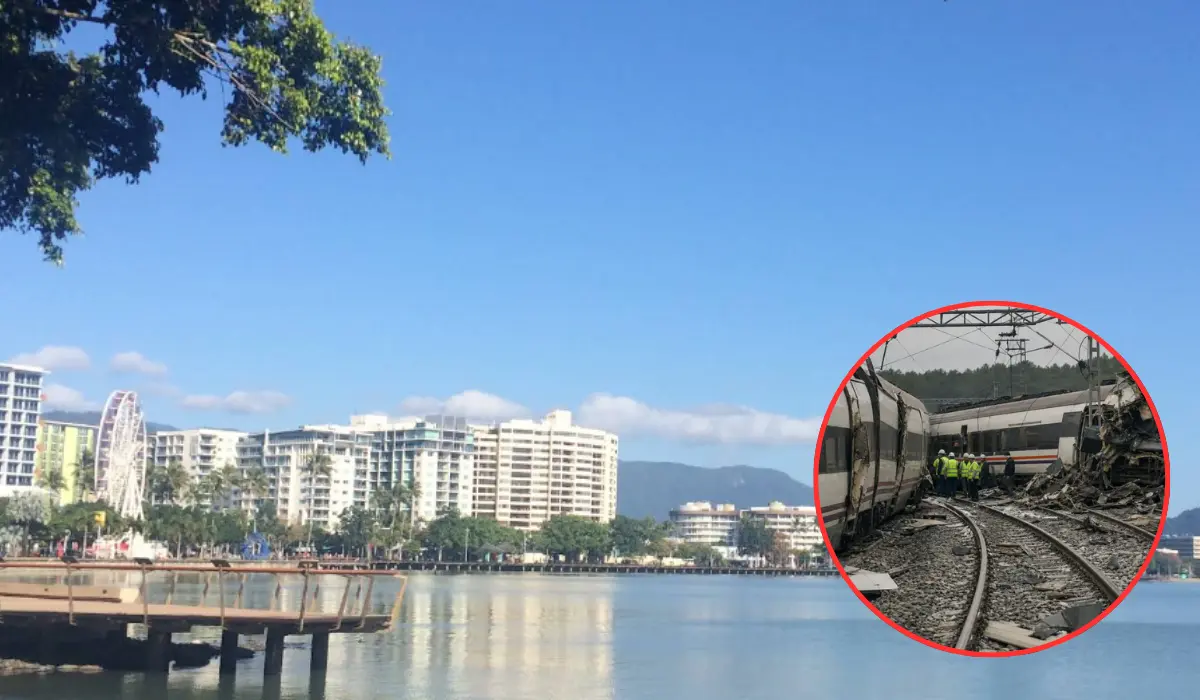
Urda (Australia News Today) November 4, 2026 – Two Australian citizens have been confirmed dead following a catastrophic collision between two high-speed passenger trains in central Spain that claimed 69 lives, according to official court and forensic announcements. The collision occurred approximately 130 kilometres south of Madrid when an express service operated by state rail company Renfe struck the rear of a stationary Iryo train carrying roughly 500 combined passengers. Spanish authorities confirmed that all 69 victims have been formally identified, including 15 foreign nationals. The tragedy—Spain’s second fatal high-speed rail disaster this year—was triggered by an automatic safety system failure, compounded by a control centre order that permitted the moving train to advance onto an occupied track block.
- Key Points
- How Did the Collision Between the Renfe and Iryo Trains Occur in Urda?
- Who Are the 69 Victims of the Spain High-Speed Rail Disaster?
- What Caused the Critical Safety Failure and How Have Spanish Authorities Responded?
- Background of the Particular Development
- Prediction: How This Development Can Affect International Travelers and European Rail Infrastructure
How Did the Collision Between the Renfe and Iryo Trains Occur in Urda?
As reported by ABC News and corroborated by coverage from The Guardian, the disaster unfolded on a section of high-speed track passing near the village of Urda in Toledo province.
According to investigative findings released by the Spanish Civil Guard and transport officials, an initial malfunction in the automatic train protection system caused train movements to grind to a halt along a 63-kilometre stretch of track connecting Madrid to Andalusia. During the stoppage, a passenger service belonging to the private operator Iryo became stationary on the line.
As documented by the Communications Office of the High Court of Justice of Castilla-La Mancha and cited by ABC News, control centre personnel subsequently issued clearance to a trailing Renfe AVE train to continue its route. Moving at an estimated speed between 160 and 200 km/h, the Renfe train struck the rear of the stationary Iryo service. The impact derailed multiple carriages, sending several down an embankment along the rural rail corridor.
Who Are the 69 Victims of the Spain High-Speed Rail Disaster?
According to forensic identification updates released by the Institutes of Legal Medicine and Forensic Sciences in Toledo, specialized medical teams completed the formal identification of all 69 deceased individuals using DNA profiling and fingerprint analysis.
As reported by The Guardian, Spanish authorities confirmed that the 69 fatalities consist of 54 Spanish citizens and 15 foreign nationals. The international victims include four citizens from the United States, two from Australia, two from Japan, and one each from Argentina, Canada, France, Mexico, Portugal, the Czech Republic, and Tunisia.
The Communications Office of the High Court of Justice of Castilla-La Mancha informed ABC News that the identities of the two Australian victims have been officially communicated to their surviving family members. In response to the confirmation, Australia’s Department of Foreign Affairs and Trade (DFAT) issued an official statement confirming it was providing consular assistance to the families of the two Australians and extending formal condolences to all those impacted by the disaster.
Commenting on the national impact of the tragedy during an interview with ABC TV, Australian Federal Member of Parliament Jason Clare described the images of the crash as “horrific”, adding that accidents of this magnitude represent events that “people never, ever recover from”.
What Caused the Critical Safety Failure and How Have Spanish Authorities Responded?
As detailed by transport reporters for The Guardian and regional media outlets, preliminary investigations center on a combination of automated signal failure and human operational directives issued from the central rail control hub in Madrid.
Spanish Transport Minister Óscar Puente publicly characterized the authorization given to the trailing Renfe train as “inexplicable”, noting that protocol dictated the train should have proceeded only under strict visual sight restrictions at low speed. In the immediate wake of mounting public scrutiny and parliamentary inquiries, Transport Minister Puente announced his resignation from office.
Speaking at the World in Progress forum, Spanish Prime Minister Pedro Sánchez declared three days of national mourning across Spain, acknowledging that it was completely unacceptable for the nation to experience two high-speed rail collisions within a single calendar year. The Urda collision follows a January rail disaster in Andalusia that killed 46 people on the same high-speed corridor.
Prime Minister Sánchez pledged that judicial bodies and independent investigators would receive all required resources to establish definitive legal liability. As reported by broadsheet journalists, Sánchez stated: “Our main obligation as the government of Spain is to restore the public’s shattered confidence in high-speed rail as soon as possible, whatever it takes”.
Background of the Particular Development
Spain operates the extensive Alta Velocidad Española (AVE) network, which forms the largest high-speed rail infrastructure in Europe and the second-largest globally after China. Historically celebrated as a benchmark of modern civil engineering and rapid transit efficiency, the network underwent structural market liberalization in recent years, allowing private open-access operators such as Iryo and Ouigo to run services alongside the state-owned rail operator, Renfe.
However, the 2026 calendar year has seen unprecedented strain placed on Spain’s rail oversight authorities. The January collision in Andalusia, which resulted in 46 fatalities, had already prompted parliamentary demands for comprehensive reviews of automated train protection (ATP) protocols and backup signaling procedures. The disaster at Urda—occurring on the primary high-speed trunk line connecting Madrid Atocha to Seville-Santa Justa—represents one of Europe’s deadliest rail accidents of the 21st century. The involvement of two distinct operating companies under a unified state-managed dispatch system has focused technical scrutiny on inter-operability standards and human-machine interface redundancies within central control stations during emergency manual overrides.
Prediction: How This Development Can Affect International Travelers and European Rail Infrastructure
The fatal collision in Urda will have far-reaching operational, economic, and regulatory consequences across international tourism markets, cross-border diplomatic bodies, and European high-speed transport networks.
Impact on International Travelers and Foreign Tourism
For international tourists—including the thousands of Australian, American, and European travelers who rely on high-speed rail to navigate Spain daily—this second tragic crash will severely dent consumer confidence in rail safety. Transport analysts anticipate a temporary shift toward domestic air travel and long-distance road transport across South-Western Europe while safety audits are underway. Consular services and travel insurance underwriters are expected to issue updated guidance regarding transport safety compliance in region-specific transit corridors.
Impact on European Rail Regulation and Safety Infrastructure
The disaster will accelerate regulatory interventions by the European Union Agency for Railways (ERA). European transport ministers will face intense pressure to mandate strict, non-overridable automated braking protocols that eliminate single-point human authorization errors during track signal blackouts. Within Spain, the disruption will force prolonged speed restrictions on major high-speed lines, potential delays in market expansion for open-access operators, and structural reorganizations within state rail infrastructure manager ADIF to rebuild public trust in continental rail networks.