
Key Points
- Landmark Defence Pact Signed: As reported by political correspondents and media outlets covering the Association of Southeast Asian Nations (ASEAN) summit, Australian Prime Minister Anthony Albanese and Philippine defense officials formally signed a comprehensive Defence Cooperation Agreement (DCA) in Manila.
- Three Core Pillars of Cooperation: Prime Minister Anthony Albanese outlined that the treaty focuses on three main pillars: guiding priority cooperation areas, enhancing maritime awareness and information sharing, and boosting strategic dialogue, planning, joint training, interoperability, and defense infrastructure development.
- Streamlined Military Operations: Philippine Defense Secretary Gilberto Teodoro described the arrangement as an “anti-red tape measure” designed to bypass bureaucratic hurdles and accelerate joint maritime and land-based drills in the contested South China Sea corridor.
- Geopolitical Significance: The agreement reinforces Manila’s defensive stance amid ongoing territorial flashpoints and overlapping sovereignty claims in the South China Sea, while marking the 80th anniversary of diplomatic relations between Australia and the Philippines.
- Regional and Strategic Impact: Australian Deputy Prime Minister Richard Marles and Foreign Minister Penny Wong emphasized that the pact supports international law, regional stability, and maritime resilience across critical Indo-Pacific trade routes.
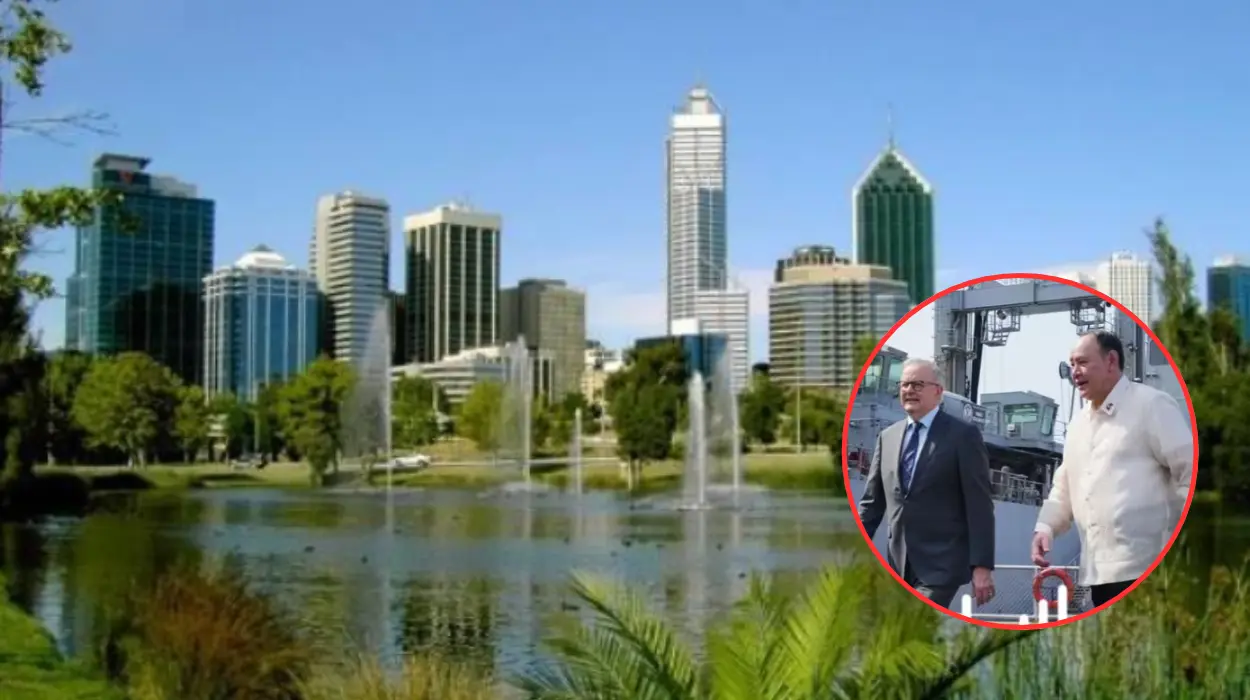
Sydny (Australian News Today) November 15, 2026 – Australia and the Philippines have formally cemented a major new defence treaty focused on enhancing maritime security, intelligence sharing, and joint military interoperability. As reported by national news agencies and international correspondents covering the ASEAN summit, Australian Prime Minister Anthony Albanese joined regional leaders in Manila to witness the signing of the updated Defence Cooperation Arrangement. The strategic pact arrives amid heightened regional tensions in the South China Sea, establishing an integrated framework designed to safeguard critical global trade corridors and reinforce international maritime law.
Why Have Australia and the Philippines Signed a New Defence Cooperation Agreement?
As reported by regional news services and official government releases, the signing of the Defence Cooperation Agreement (DCA) in Manila coincides with the 80th anniversary of formal diplomatic relations between Australia and the Philippines. Prime Minister Anthony Albanese stated that the bilateral partnership is structured to ensure a peaceful, stable, and secure Indo-Pacific region, prioritizing national sovereignty and territorial integrity.
The Philippines has faced repeated maritime confrontations with China over conflicting territorial claims in the South China Sea—a vital global trade route. As reported by foreign affairs analysts, the new pact provides Canberra and Manila with expanded legal and operational mechanisms to conduct joint patrols, share critical surveillance data, and develop shared defense infrastructure.
Detailing the structural components of the pact, Prime Minister Anthony Albanese stated: “Firstly, it’ll guide our priority areas of cooperation. Secondly, to enhance our maritime awareness activities and information sharing. And thirdly, to increase our strategic dialogue, planning, training, interoperability, and defence infrastructure development.”
How Will the Defence Pact Streamline Joint Military Exercises?
According to statements from Philippine Defense Secretary Gilberto Teodoro, the newly finalized arrangement serves as an “anti-red tape measure” for existing visiting forces protocols. By cutting through administrative bottlenecks and reducing coordination friction, the pact enables faster deployment for joint military exercises and multilateral training operations.
Deputy Prime Minister and Defence Minister Richard Marles emphasized that the enhanced framework goes beyond routine diplomatic engagement, facilitating practical defense cooperation and building collective military capability. Furthermore, Australian Foreign Minister Penny Wong noted that the alignment reinforces adherence to the 2016 international arbitral tribunal ruling, which rejected sweeping unilateral claims in the South China Sea.
The agreement also incorporates technological enhancements, including expanded investments in cybersecurity infrastructure and domain awareness tools designed to monitor maritime traffic across vital Southeast Asian shipping lanes.
Background of Australia-Philippines Defence Relations
The formalization of the Defence Cooperation Agreement represents the culmination of decades of progressive military engagement between Australia and the Philippines. Historically anchored in counter-terrorism cooperation, joint humanitarian assistance, and periodic bilateral training exercises, the security partnership has evolved rapidly in response to shifting geopolitical dynamics in the Indo-Pacific. As multilateral tensions intensified across contested waterways, both nations recognized the necessity of upgrading their legal and operational frameworks. By transitioning from ad-hoc military drills to a structured, institutionalized alliance, Canberra and Manila have aligned their strategic capabilities to address modern maritime security challenges and protect open trade routes.
Prediction: How This Defence Pact Will Affect Regional Stability and Strategic Alliances
For regional security analysts, the deepening defense alignment between Australia and the Philippines is expected to strengthen deterrence and improve rapid response coordination among allied nations operating in Southeast Asia. While Beijing is anticipated to voice diplomatic objections regarding increased multilateral military presence in the South China Sea, the pact provides Manila with crucial strategic backing from a key middle power. For Australian defense planners, the agreement solidifies Canberra’s broader commitment to regional security, ensuring that naval and air forces maintain high levels of interoperability with key ASEAN partners in navigating future geopolitical flashpoints