
Key Points
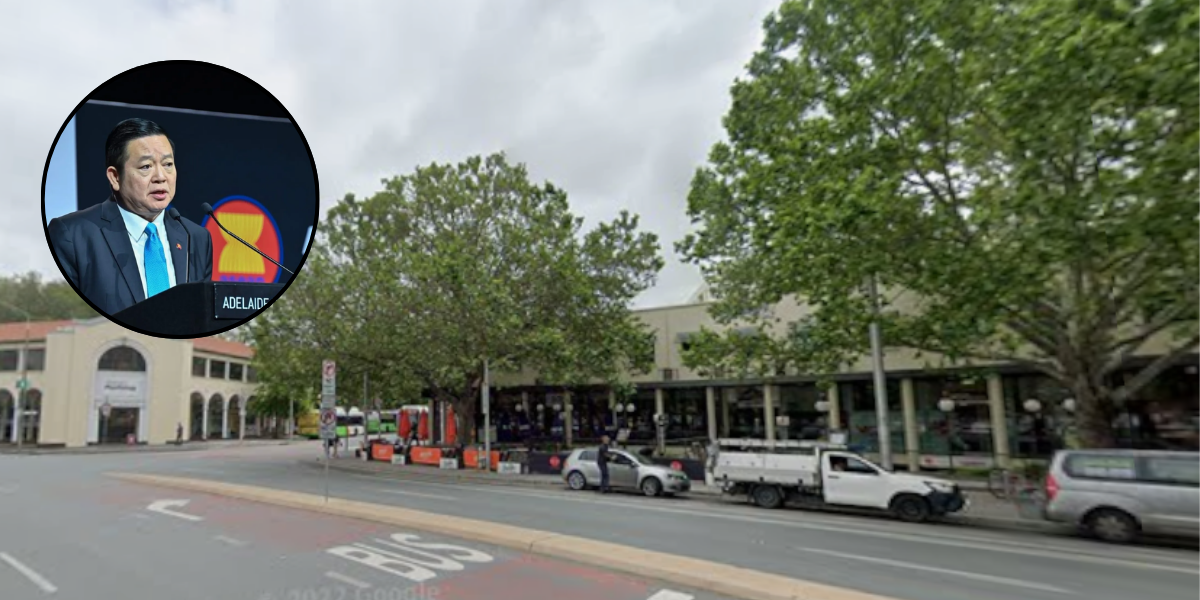
- ASEAN Secretary-General Dr Kao Kim Hourn said he remained “optimistic” about ASEAN-Australia relations despite Australia’s changing migration debate.
- Speaking to InDaily in Adelaide, Dr Kao said shifts in public opinion on migration were a natural part of Australia’s political system.
- Dr Kao said Australia was a multi-party democratic society and described the country’s political movement on migration as a “pendulum swing back and forth”.
- His comments came as migration remains a significant issue in Australian politics, including debate surrounding One Nation and changes to international student and working-holiday visa arrangements.
- Home Affairs Minister Tony Burke has announced changes affecting working-holiday-makers, student visas and other parts of Australia’s migration system.
- The Secretary-General stressed that ASEAN and Australia have extensive shared economic, political and security interests.
- The 2026 Australia-ASEAN Business Forum in Adelaide has focused on deeper economic integration, trade, investment, energy, digital transformation, skills and private-sector cooperation.
- Official ASEAN records show Dr Kao continued holding meetings with Australian political and business representatives during the Adelaide forum, including discussions on trade, investment, education, energy and people-to-people links.
Australian News Today (ANT) September 30, 2026 – ASEAN Secretary-General Dr Kao Kim Hourn has expressed optimism about the future of relations between Australia and Southeast Asia despite a politically sensitive debate over migration in Australia. Speaking exclusively to InDaily during the Australia-ASEAN Business Forum in Adelaide, Dr Kao said changing public attitudes towards migration were a natural feature of a democratic, multi-party society, while stressing the importance of maintaining balance. He said ASEAN and Australia continued to share substantial economic, political and security interests, and expressed hope that those areas of cooperation would continue to develop despite changes in Australia’s migration policy and political debate.
- Key Points
- Why Has the ASEAN Secretary-General Responded to Australia’s Migration Debate?
- What Did Kao Kim Hourn Say About Australia’s Changing Migration Position?
- How Is Australia Changing Its Migration System?
- What Changes Are Being Made to Student Visas?
- What Does One Nation’s Position Mean for the Wider Migration Debate?
- Why Does ASEAN Continue to Emphasise Shared Interests With Australia?
- What Other Meetings Did Kao Kim Hourn Hold in Adelaide?
- How Does Migration Connect With Australia-ASEAN Economic Relations?
- What Is the Background to the Australia-ASEAN Relationship?
- How Could the Development Affect ASEAN-Australia Stakeholders?
Why Has the ASEAN Secretary-General Responded to Australia’s Migration Debate?
The comments by Dr Kao come at a time when migration has become an increasingly prominent issue in Australian political discussion.
According to the report supplied by InDaily, Dr Kao was asked about changes in Australian attitudes towards migration and the emergence of stronger anti-migration rhetoric, including from political parties such as One Nation.
The ASEAN Secretary-General acknowledged the political environment in which the debate was taking place. He described Australia as “a multi-party system” and “a democratic society”, according to InDaily.
Dr Kao also placed the debate within the longer history of Australian nation building.
“Australia has gone through a long period of nation building. It’s natural to have this pendulum swing back and forth,” he said, according to InDaily.
His comments did not amount to an endorsement or rejection of any Australian political party or migration policy. Instead, he described changes in public opinion as part of the political process and concentrated on the continuing relationship between Australia and ASEAN.
That distinction is significant because migration policy in Australia affects not only domestic politics but also education, employment, temporary visas and Australia’s relationships with countries whose citizens make up a substantial part of international mobility to Australia.
What Did Kao Kim Hourn Say About Australia’s Changing Migration Position?
As reported by InDaily in its interview with Dr Kao, the ASEAN Secretary-General said he remained optimistic about Australia’s relationship with Southeast Asia despite the changes taking place around migration.
“I’m sure the leadership in Australia is very wise,” Dr Kao said, according to InDaily.
He also referred to Australia’s long experience of nation building and said decisions concerning the country’s future ultimately rested with Australians and their political leadership.
The Secretary-General’s comments were framed around the broader Australia-ASEAN relationship rather than the merits of individual migration measures.
Dr Kao said the relationship between ASEAN and Australia had been defined by shared interests.
“But I would say that the relations between ASEAN and Australia have been defined by many shared interests,” he said, according to InDaily.
He added that ASEAN hoped those shared interests would continue growing as the regional political and economic environment evolved.
“After all, we have a lot of shared economic, political security interests between the two sides,” Dr Kao said, according to the report.
The statement reflects the wider agenda of the Australia-ASEAN Business Forum, which is designed to strengthen economic and commercial links between Australia and ASEAN member states.
How Is Australia Changing Its Migration System?
The remarks came shortly after Home Affairs Minister Tony Burke announced a series of migration-related measures.
According to a September 17 account of Burke’s comments published by The Point, the Australian Government planned changes affecting working-holiday-maker arrangements, student visas and the processing of some migration applications.
One significant measure involved a ballot system for people seeking second- and third-year working-holiday visas.
Burke said applicants would still need to satisfy the existing regional-work requirements. However, qualifying for a subsequent year would not automatically mean receiving a place because the Government would impose limits through a ballot.
According to The Point, the second-year ballot was to be limited to 45,000 places, compared with 57,000 people who had qualified in the previous year. The third-year programme was to be limited to 5,000 places, compared with 31,000 people in the relevant group the previous year.
The changes illustrate the policy environment surrounding Dr Kao’s comments. Australia’s migration debate is not limited to permanent migration. It also includes temporary migration, international education, working-holiday programmes and the transition between different visa categories.
What Changes Are Being Made to Student Visas?
International students are another important part of Australia’s migration debate.
As reported by The Point from Tony Burke’s September 17 comments, the Government was also addressing what it described as “visa hopping”.
Burke distinguished between legitimate changes in study circumstances and movements between courses or institutions that he said could be used primarily to pursue migration outcomes.
Under the proposed changes described by Burke, students moving to a different course or institution could face a requirement to apply for a new visa in circumstances where previously a transfer could occur under existing arrangements.
Burke also discussed restrictions around progression between qualifications. He said moving upwards in the qualification structure, such as from a bachelor’s degree to a master’s degree, would remain possible, while the Government intended to address repeated movement between different levels and providers.
The international education sector is particularly relevant to Australia-ASEAN relations because education forms part of the people-to-people and economic connections between Australia and Southeast Asia.
The ASEAN Secretariat has also highlighted education and people-to-people exchanges as part of its engagement with Australia. On September 29, the Secretary-General met the ASEAN Committee in Canberra in Adelaide and discussed ASEAN-Australia relations, including education, economic cooperation and people-to-people exchanges.
What Does One Nation’s Position Mean for the Wider Migration Debate?
One Nation was specifically raised during InDaily‘s interview with Dr Kao as an example of the stronger anti-migration sentiment present in Australian political debate.
The Secretary-General did not offer a political judgement on One Nation.
Instead, he acknowledged that Australia’s multi-party democratic system naturally produces changes in political positions and public opinion.
His description of migration debate as a “pendulum swing back and forth” placed the issue within a broader political cycle rather than presenting the current debate as an isolated development.
This is important in understanding the comments. Dr Kao’s central message was that changes in domestic Australian political discussion did not necessarily alter the underlying strategic relationship between Australia and ASEAN.
Why Does ASEAN Continue to Emphasise Shared Interests With Australia?
ASEAN’s official activities during the Adelaide forum provide wider context for Dr Kao’s comments.
The ASEAN Secretariat said the 2026 Australia-ASEAN Business Forum was being held in Adelaide on September 29 and 30 under a theme focused on deepening economic integration in a changing global landscape. The organisation identified trade and investment, supply-chain resilience, energy transition, digital transformation, skills development and private-sector cooperation as important areas of collaboration.
The forum itself brings together government, business and industry representatives from Australia and ASEAN countries. Its published programme includes energy security and transition, digital economy and artificial intelligence, food security and agribusiness, human capital, trade and investment, and broader Australia-ASEAN economic integration.
This wider programme demonstrates why the Secretary-General focused on shared interests when discussing Australia’s migration debate.
The relationship encompasses substantially more than migration policy.
What Other Meetings Did Kao Kim Hourn Hold in Adelaide?
Dr Kao’s activities during the forum extended across Australian government and business circles.
According to the ASEAN Secretariat, he met Bran Black, Chief Executive of the Business Council of Australia, on September 29. Their discussions covered ASEAN-Australia private-sector engagement, trade and investment, supply-chain resilience and the use of regional trade agreements, including the ASEAN-Australia-New Zealand Free Trade Area and the Regional Comprehensive Economic Partnership.
Dr Kao also met Anoulack Chanthivong, New South Wales Minister for Industry and Trade and Minister for Innovation, Science and Technology. The discussion included trade, investment, industry development and cooperation in areas such as artificial intelligence, quantum technology, biotechnology and medical technology.
On September 30, Dr Kao met South Australian Senator Anne Ruston. According to his official record, their discussions covered trade and investment, digital transformation, food and energy security, education and people-to-people exchanges.
He also met South Australian Treasurer and Minister for Energy and Mining Tom Koutsantonis. Their discussions included renewable-energy integration, energy storage, electricity-grid planning, the ASEAN Power Grid and critical minerals.
These meetings indicate that the Adelaide visit was centred on a broad economic and strategic agenda rather than migration alone.
How Does Migration Connect With Australia-ASEAN Economic Relations?
Migration and international mobility can have economic and social consequences for Australia and Southeast Asian countries, particularly through education, tourism, employment and professional connections.
However, the material surrounding Dr Kao’s comments does not establish that the current Australian migration reforms will lead to a specific change in ASEAN-Australia relations.
The Secretary-General instead emphasised continuity.
The ASEAN Secretariat said ahead of the forum that Dr Kao’s participation reaffirmed ASEAN’s commitment to strengthening its partnership and economic cooperation with Australia under the ASEAN-Australia Comprehensive Strategic Partnership.
That partnership provides the broader diplomatic framework in which migration-related discussions are taking place.
The current debate therefore contains two parallel developments: Australia is adjusting elements of its migration system, while ASEAN and Australia are continuing to expand cooperation across trade, investment, energy, technology and education.
What Is the Background to the Australia-ASEAN Relationship?
The Australia-ASEAN relationship has developed across several areas of economic, political and security cooperation.
The 2026 business forum is part of that broader engagement. According to ASEAN, Dr Kao’s Adelaide visit included participation in the Australia-ASEAN Business Forum, an energy leadership dialogue and the ASEAN Gala Dinner. He was also scheduled to meet Australian ministers and private-sector representatives across areas including state development, artificial intelligence, digital economy, industry, trade, innovation, science, technology, energy, mining, infrastructure and transport.
The forum’s organisers describe the event as a platform for Australian and ASEAN leaders to build commercial relationships and explore trade and investment opportunities.
Dr Kao’s latest remarks therefore came against a backdrop of continued institutional engagement even as Australia’s domestic political debate over migration evolves.
How Could the Development Affect ASEAN-Australia Stakeholders?
The immediate effect is likely to be seen through continued attention to the balance between Australia’s domestic migration policies and its wider international relationships.
For ASEAN governments, businesses, universities and people with links to Australia, changes to student and temporary migration arrangements may be relevant to future mobility and education pathways. However, the available statements do not establish a specific future outcome for those groups.
For Australian businesses, the Adelaide forum indicates that ASEAN-Australia cooperation remains focused on areas including trade, investment, supply chains, energy, digital technology, skills and private-sector engagement.
The Secretary-General’s comments also indicate that ASEAN’s approach is to continue engaging with Australia despite changes in domestic political debate.
The longer-term direction will depend on Australian migration policy decisions, public and political debate, and the implementation of measures announced by the Australian Government, alongside the continuing development of the ASEAN-Australia Comprehensive Strategic Partnership.