Key Points
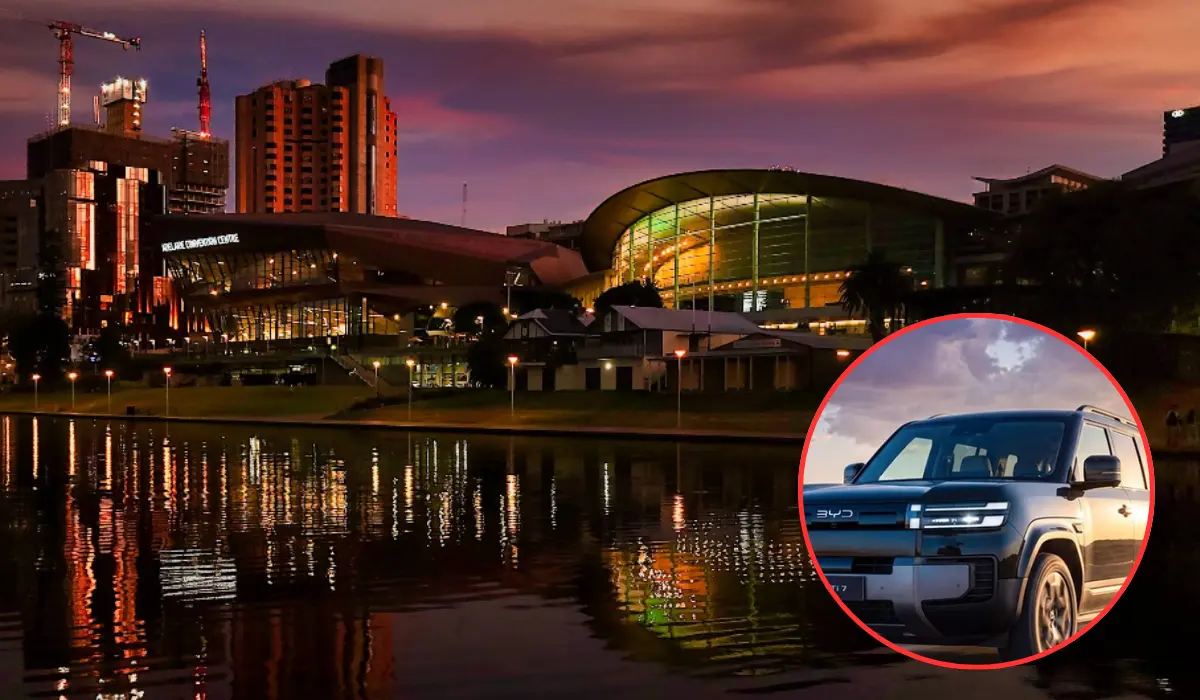
- Chinese automotive giant BYD has secured official Australian government road approval for its boxy, seven-seat Ti7 plug-in hybrid SUV, signaling a local showroom arrival expected in early 2027.
- Known in its domestic market as the Fang Cheng Bao Ti7, the Australian listing confirms the vehicle will be rebadged directly under the mainstream BYD brand.
- Unlike rugged ladder-frame models, the Ti7 utilizes a car-based monocoque platform, measuring 5,146mm long, 1,995mm wide, and 1,865mm tall with a 2,920mm wheelbase.
- Federal Road Vehicle Descriptor (RVD) database documents list two plug-in hybrid powertrains pairing a 1.5-litre turbocharged four-cylinder petrol engine with electric motors, offering an entry 200kW two-wheel-drive setup and a top-spec 300kW all-wheel-drive variant.
- Overseas specifications indicate a 0–100km/h sprint time of 4.8 seconds for the 300kW model, alongside battery options yielding up to 119km of WLTP electric range in the UK market.
Canberra (Australian News Today) November 09, 2026 – Electric vehicle giant BYD has dropped its strongest hint yet that a large new seven-seat family SUV is bound for Australian showrooms, following official federal road approval for its ruggedly styled Ti7 plug-in hybrid. Filings published in the Department of Infrastructure’s Road Vehicle Descriptor (RVD) database under approval number VTA-066795 confirm the multi-seater has cleared regulatory hurdles for Australian roads, setting up a local commercial debut anticipated for 2027. Sold in China under the manufacturer’s premium Fang Cheng Bao sub-brand, federal documentation indicates the vehicle will drop its domestic nameplate in favor of standard BYD badging down under. The approval covers two electrified all-wheel-drive and two-wheel-drive powertrains developing up to 300kW of system output, positioning the large SUV as a direct electrified alternative to established family haulers.
- Key Points
- What Specifications and Powertrains Are Confirmed for the Australian BYD Ti7?
- How Does the Ti7’s Battery and Interior Technology Compare Internationally?
- Where Will the Ti7 Sit in BYD Australia’s Growing SUV Lineup?
- Background of BYD’s Expansion and the Fang Cheng Bao Sub-Brand
- Prediction: How Will the Arrival of the BYD Ti7 Impact the Australian Family SUV Market?
What Specifications and Powertrains Are Confirmed for the Australian BYD Ti7?
As reported by automotive journalist Danny Thai of Zecar, the Australian RVD database filings outline crucial structural and mechanical details for the local market Ti7.
The regulatory documentation lists two distinct plug-in hybrid electric vehicle (PHEV) powertrain configurations under the internal QZ model designation. Both setups integrate a 1.5-litre turbocharged four-cylinder petrol engine with BYD’s advanced electric propulsion systems. The entry-level specification delivers a combined output of 200kW to two wheels, while the flagship variant employs a dual-motor all-wheel-drive layout generating 300kW.
In terms of dimensions, the Australian-spec Ti7 features a substantial road footprint:
- Length: 5,146 mm
- Width: 1,995 mm
- Height: 1,865 mm
- Wheelbase: 2,920 mm
- Tare Mass: 2,477 kg
- Seating Capacity: 7 seats
The vehicle’s physical dimensions place it larger than popular family transport options like the Hyundai Santa Fe and Kia Sorento, aligning closely with large-format vehicles such as the Toyota Kluger. Despite its upright, boxy visual aesthetic, the Ti7 is built around a monocoque (unibody) chassis rather than a heavy-duty ladder-frame architecture, prioritizing urban ride quality and cabin packaging over extreme off-road rock crawling.
How Does the Ti7’s Battery and Interior Technology Compare Internationally?
As reported by Zecar motoring editor Danny Thai, battery capacity for the incoming Australian models remains subject to final local confirmation, though international right-hand-drive homologation provides a clear blueprint.
In the United Kingdom, where the Ti7 has already entered right-hand-drive sales channels, the vehicle features a 35.6kWh Blade lithium-iron-phosphate (LFP) battery pack. This provides an electric-only driving range of approximately 119km on the European WLTP testing cycle, complementing the petrol engine for long-distance touring. In domestic Chinese markets, a larger 50kWh battery is also manufactured, providing up to 315km of zero-emission driving under CLTC test protocols. Overseas 300kW variants claim a 0–100km/h acceleration time of 4.8 seconds.
Inside the cabin, the seven-seat layout is expected to mirror global feature sets. Standard equipment across overseas markets includes:
- A 15.6-inch central infotainment display
- A 10.25-inch digital driver instrument cluster
- Tri-zone automatic climate control
- Panoramic glass sunroof
- Vehicle-to-Load (V2L) bidirectional charging capabilities
Where Will the Ti7 Sit in BYD Australia’s Growing SUV Lineup?
As reported by automotive reporters across Drive and Zecar, the clearance of the Ti7 marks another expansion step for BYD distributor EVDirect in Australia.
While BYD Australia has not yet officially announced local retail pricing or exact showroom delivery schedules, industry precedent suggests a launch window during early 2027 following the federal database approval.
In the UK market, the model retails from £47,995 (approximately A$92,000 drive-away). However, local industry observers anticipate Australian pricing will be substantially lower due to shorter supply lines from Chinese manufacturing hubs and favorable import tariff structures. For context, BYD’s existing Sealion 8 seven-seat plug-in hybrid SUV currently starts at $56,990 before on-road costs in Australia. The addition of the Ti7 will give the brand a distinct two-pronged family offering, splitting the sleeker Sealion range from the boxy, adventure-styled Ti7.
Background of BYD’s Expansion and the Fang Cheng Bao Sub-Brand
BYD (Build Your Dreams) has rapidly escalated its global export footprint since transitioning entirely away from pure internal combustion engine (ICE) production to focus exclusively on battery-electric (BEV) and plug-in hybrid (PHEV) vehicles. In its domestic market of China, BYD operates a multi-tiered brand structure. While core mass-market vehicles bear the standard BYD badge, specialized sub-brands handle premium and niche segments: Denza focuses on luxury executive transport, Yangwang targets ultra-luxury technology showcases, and Fang Cheng Bao caters to rugged, adventure-oriented SUVs.
The Ti7 was developed under the Fang Cheng Bao umbrella (where it is known as the Fang Cheng Bao Ti7 or Titanium 7) to bridge the gap between suburban family comfort and rugged off-road styling cues. However, when exporting to right-hand-drive markets such as the United Kingdom and Australia, BYD has opted to streamline its branding strategy by selling Fang Cheng Bao products directly under the established BYD nameplate to capitalize on existing consumer brand recognition.
Prediction: How Will the Arrival of the BYD Ti7 Impact the Australian Family SUV Market?
The launch of the BYD Ti7 in Australia during 2027 is projected to accelerate the shift toward plug-in hybrid powertrains within the popular large family SUV segment.
Impact on Traditional Automotive Manufacturers: The introduction of a three-row, 5.1-metre plug-in hybrid SUV with a 300kW output will apply pressure to legacy Japanese and South Korean manufacturers. Dominant family vehicles such as the Toyota Kluger, Hyundai Santa Fe, and Kia Sorento have historically led the segment through conventional hybrid or diesel options. A competitively priced BYD Ti7 offering over 100km of pure electric range will force rivals to hasten the introduction of their own plug-in hybrid variants to retain market share among suburban buyers seeking to reduce daily fuel expenditure.
Impact on Australian Fleet and Novated Lease Buyers: For Australian families and corporate fleet operators utilizing novated leases, the Ti7’s combination of seven-seat capacity and low-emissions PHEV status offers significant financial advantages. With daily urban commutes easily covered by the vehicle’s battery capacity, family buyers can operate the vehicle as an electric car during the week while retaining long-distance petrol capability for regional weekend travel. This dual capability is expected to drive high demand among suburban households seeking to bridge the transition to full electric mobility without range anxiety.